
Publisher’s Note
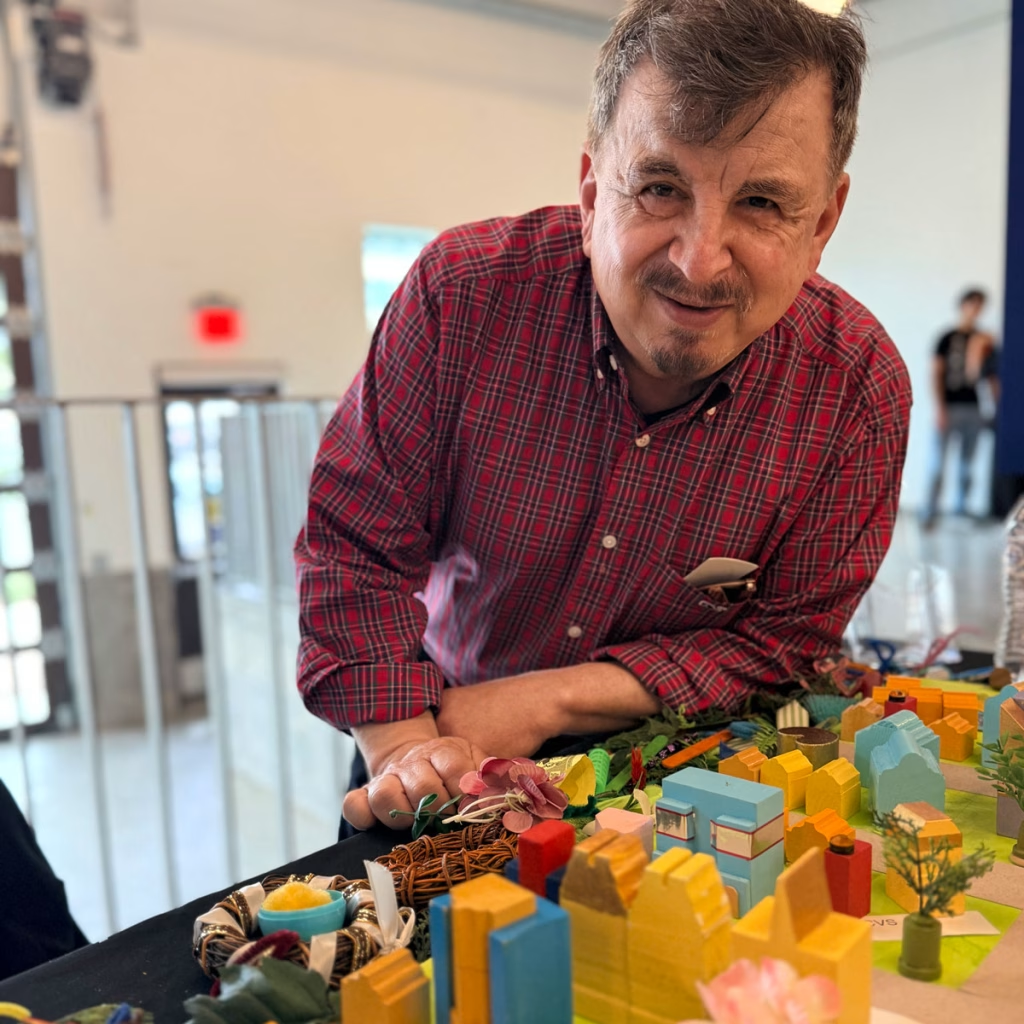
Last week, Houston became the setting for an extraordinary exercise in imagining the future of our cities. As part of Community Day at Turkey Bend in the East End hosted by Buffalo Bayou Partnership in collaboration with the Smithsonian’s National Museum of the American Latino, urban planner James T. Rojas led his signature Dream Play Build workshop, inviting participants to construct their visions of community using simple materials and shared storytelling.
Rojas is a nationally recognized urban planner who examines how Latino cultural traditions and immigrant experiences shape the design of American cities. Through decades of research, writing, and hands-on workshops across the country, he explores how culture, memory, and everyday rituals influence the spaces where we live.
On the plane home from Houston, Rojas began writing the reflections below. His family left Chihuahua during the upheaval of the Mexican Revolution, crossing north through El Paso. From there their paths split—one branch continuing west to Los Angeles, where Rojas grew up, while another remained in Texas.
In the essay that follows, he imagines what his relationship to place, culture, and landscape might have been had his family stayed in Texas. Part personal history and part urban observation, the piece offers a thoughtful lens through which to see Houston’s improvisational landscape.
I’m honored to publish his essay here as part of my ongoing Why Houston series, which looks at how artists, thinkers, and cultural leaders encounter this city and help us see it differently.
~ Melissa Richardson Banks, Publisher & Editor, MUSED Houston
Rasquache Urbanism in Houston
My family left Chihuahua during the upheaval of the Mexican Revolution, crossing north through El Paso. From there our paths split. One side of the family continued west to Los Angeles, while the rest settled in Texas.
So visiting Houston carried a quiet set of questions for me, what ifs. What if my branch of the family had stayed in Texas instead of heading to Los Angeles? What would my relationship to place, culture, and landscape feel like today?
Los Angeles is the city that shaped me and my career, particularly my critical study urban design, especially how Latinos are transforming its cultural and physical landscape.
Houston, however, is a city you shouldn’t overthink.
As an energy town, Houston also has much in common with cities like Calgary, Bakersfield, and parts of Denver, places where the economy has been shaped by oil, gas, and extractive industries. These economies produce landscapes dominated by infrastructure, warehouses, worker housing, and wide transportation corridors rather than traditional urban density.
From an urban design perspective, Houston which had no formal planning, often feels less like a dense global metropolis and more like places such as San Bernardino in Southern California’s Inland Empire. Both share landscapes of informality, randomness, and large stretches of vacant or underused land.
In that sense, Houston also echoes cities like Stockton in California’s Central Valley places where agriculture, migration, industry, and climate produce a loose, expansive urban fabric rather than a tightly ordered one. You see it in small-scale housing, improvised additions, and low-slung homes sitting on open land or slightly elevated lots to deal with flooding. These forms respond at once to climate, culture, and economics. The overall feeling is distinctly southern: wide horizons, modest buildings, and a horizontal landscape.
Next door to these modest homes are oversized “farmhouse chic” houses popularized by Joanna Gaines, now mushrooming across many Houston neighborhoods. Their scale and aesthetic are rapidly creating a kind of parallel city that sits uneasily beside the older, more improvised landscape.
For urban designers, environments like this invite a different way of seeing the city, not as something polished or complete, but as a landscape of improvisation, resilience, and possibility. In this context, an urban designer might read Houston through a rasquache lens where creativity, resourcefulness, and everyday materials shape the city. This looseness creates space for experimentation and adaptation that more tightly planned cities often lack.
Yet Houston also shares something deeper with the landscapes and cultural rhythms of Northern Mexico. The climate, the open land, and the hybrid cultural influences produce a built environment that often feels improvised and adaptive.
The cultural landscape also raises interesting contrasts. In Los Angeles, Latino communities have often had to fight for visibility in the city’s physical and cultural landscape. Houston, by contrast, seems to absorb its Latino identity more casually into everyday life. Latino urbanism feels less visually defined. I saw few street vendors and none of the elaborate front-yard fences, fountains, and decorated suburban yards that characterize many Latino neighborhoods in Los Angeles.
Yet the cultural connection remains clear. In Houston, the cowboy and the vaquero are essentially the same figure two expressions of the same borderlands culture. In fact I was there during the 3 week long rodeo!
There is a social casualness to Houston that feels like a large Latino family gathering where you don’t know half the people, but somehow you know you’re related. There’s no judgment, just a lot of chitchat, easy conversations, and a sense of familiarity that makes the place feel immediately comfortable.
This casualness is also expressed in the city’s physical landscape. Across Houston, many leftover or underused parking lots have been casually converted into beer gardens, simple places with string lights, scattered tables, and a few bare-bones interventions. These improvised spaces capture the same spirit as the social atmosphere: informal, adaptable, and welcoming without needing much design polish.
There is a social casualness to Houston that feels like a large Latino family gathering where you don’t know half the people, but somehow you know you’re related. There’s no judgment just a lot of chitchat, easy conversations, and a sense of familiarity that makes the place feel immediately comfortable. This casualness is expressed in the many converted parking lots in to beer gardens with lights, tables and bare bones interventions.
Standing in Houston, I couldn’t help but feel that this landscape might have been another version of my own story. My family split nearly a century ago one path leading to Los Angeles, the other remaining in Texas. Visiting Houston felt like briefly stepping into the urban and cultural landscape of that other possibility.
James Rojas’ Favorite Houston Spots